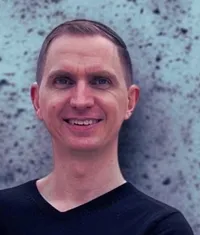
human://vegard
Vegard — accountable for everything
Talks to you, makes every decision, approves every claim and signs off every deploy. One person from first letter to handover.
How I work · One man. An army of agents.
Agents do the volume: research, drafts, code, tests, checks. I make every decision, set every approval rule and sign off every deploy. You talk to one person from the first letter to handover.
Teal is agent work. Ember is a rejection. Gold is a human decision.
The crew
Each agent has one job, a list of things it’s never allowed to do, and a running cost you can see. All of them report to me.
human://vegard
Talks to you, makes every decision, approves every claim and signs off every deploy. One person from first letter to handover.
Reads your market, competitors, sources and analytics before anything is planned.
Never decides what gets built.
Drafts structure: sitemaps, data models, page outlines, internal links.
Never ships a plan I haven’t approved.
Drafts copy and articles in your voice from your real expertise.
Never invents facts, prices or testimonials.
Checks every claim against the source and rejects what it can’t prove.
Never lets an unsupported claim through.
Writes code, components and integrations to my spec.
Never deploys to production on its own.
Runs hundreds of automated tests, accessibility and speed checks on every change.
Never marks a failing check as passed.
Watches crawlers, uptime, budgets and errors after launch.
Never spends past the budget cap you set.
The operating principle
On this site, gold always means a human act: a decision, an approval, a seal. Here’s where the line sits.
What agents do
What only I do
Verification gates
When I built a law firm’s knowledge hub, an AI pass suggested 1,175 internal links across 230+ articles. The gates threw out 72 that were invented outright and 179 that didn’t belong. 924 survived and went live.
Code, not a model, checks the boring things first: does the quoted anchor exist word for word, does the linked page exist, is the schema valid, are banned phrases absent.
A second model checks every factual statement against the source dossier and marks it supported, partial or unsupported. Unsupported claims don’t ship.
Every change runs the test suite. The law-firm engine alone has 649 of them.
AI spend has a hard monthly cap. On that engine, everything stops at €100 until a human raises it.
I approve what ships. For client-facing content you set the rule: one-click approval per item from a daily digest, or automatic publishing for categories you trust.
The process
2 minutes
Five short steps: what you need, who you are, your budget and how you like to talk. I read it myself and look at your site before I reply.
this week
Your goals, your constraints, and whether I’m the right builder for them. You leave with a clear next step, whether or not we work together.
within 48 h
A written proposal: scope, price, timeline and exactly what you’ll own. No hourly meter. Nothing starts until you say yes.
You approveweekly previews
Agents do the volume; I check every claim and sign off every deploy. Every week you get a preview link and tell me what to change.
I sign offinto your accounts
Code, content, keys, docs, runbook and tests, in accounts you own. Bugs found in the first 30 days are fixed at no charge.
You own itWhat you own
I work inside your accounts with access you grant. When the project ends, there’s nothing to hand back, because it was never mine.
Trust
These rules go into every proposal. If your industry needs more, such as a law firm’s privilege or a clinic’s patient data, we write the extra rules down together.
Your proposal lists which AI providers the project uses and for what. You can veto any of them.
Client work runs on providers’ business API terms, under which your inputs aren’t used to train their models. No consumer chat apps.
AI keys and billing sit in your provider accounts, with spending caps you set. When we part ways you revoke my access and nothing breaks.
Privileged, patient and personal data is kept out of prompts. Agents work from public content, your sources and anonymised examples unless we agree otherwise in writing.
Nothing an agent drafts goes live without passing the gates and the approval rule you agreed (per item in pilot mode, per category in auto mode).
What an agent proposed, what the gates rejected and who approved it is logged, so you can audit it later.
Continuity
There’s no hidden team behind me, so I won’t promise you a stand-in. I promise something more useful: everything a competent developer needs to take over is already yours.
Domain, DNS, hosting, code repository, AI provider keys and analytics are registered to you. I work inside them with access you grant, and can revoke, at any time.
A README and architecture notes that explain how the pieces fit and why, written for a stranger, not for me.
How to deploy, roll back, rotate keys and restore data, step by step, kept next to the code.
Automated tests run on every change. If someone else edits the code later, the tests say exactly what broke.
TypeScript, Astro, Cloudflare Workers, and WordPress where your editors need it. No proprietary framework only I understand.
60 seconds
Film · 60 s · captions on
One man. An army of agents.
60 seconds with WebRevolution.si
Thanks for watching
Found by AI. Chosen by people. Owned by you.
webrevolution.si · Personal reply within one business day.
Transcript and scene descriptions. Captions are always on in the player.
Scene 1, The question. An AI chat window. A buyer types: “Who can rebuild our website so AI recommends us?” The assistant replies that it can only recommend businesses whose sites it can read and verify, cites two competitors and marks yourcompany.com as having no readable text. Beside it: 51% of B2B software buyers start research in an AI chatbot (G2 buyer survey, March 2026).
Your next client asks an AI before they ask you.
51% of B2B software buyers start their research in an AI chatbot.
Scene 2, Through a crawler’s eyes. A website wireframe. A crawler’s scan line passes over it and the page dissolves, leaving only <div id="root"></div> and the count: 0 words. That was my own old site, fetched as raw HTML.
Through a crawler’s eyes, a JavaScript-built site can be an empty page.
My own old site served crawlers 0 words. So I rebuilt it.
Scene 3, One man, an army of agents. My portrait in a gold ring. Seven teal agent icons drift in, orbit it, then line up beneath it: researcher, architect, writer, fact-checker, builder, tester, watcher.
One man. An army of agents.
Seven specialised agents do the legwork.
I direct every one, and I answer for the result.
Scene 4, Found, cited, chosen. Found, cited, chosen, with four dated receipts: 1,100+ pages live on a law firm’s own domain (Client · law firm); 103 → 0 server invocations from crawlers, before and after the static rebuild (Own product · SitShape); 72 hallucinated links rejected before publishing (Client · law firm); 3 weeks from empty repo to a live, monetised SaaS (Own product · Filyhost). A gold seal stamps: human approval.
Found by AI. Cited with sources. Chosen by people.
Real numbers from live systems, each with a date and a method.
Agents do the work. Nothing ships until I approve it.
Scene 5, What I build. Five service cards with starting prices: AI-ready website rebuild from €6,500; AI content & distribution engine from €3,500; AI agents & automation from €7,500; Custom tools & agent endpoints from €8,900; Conversion landing pages from €2,400.
What I build: AI-ready websites, content engines, agents and tools.
Clear scope. Published prices. You own everything.
Scene 6, Built by me. My portrait again: “I build every project myself.” Signature line: Agents propose. A human approves.
I build every project myself. No account managers, no hand-offs.
Agents propose. A human approves.
Scene 7, Your next step. End card: Be the business AI recommends. Start a project, scan your site for free, book 20 minutes, or send a WhatsApp message.
Start a project, scan your site for free, or book 20 minutes with me.
Questions
No. Agents do the volume; I do everything that needs judgement. If your project needs a specialist I don’t replace, such as a photographer or a lawyer, we agree on it in writing first.
The right one for each job, chosen per project and listed in your proposal. On recent projects that has mostly meant Anthropic’s Claude models for research, writing and code, with OpenAI, Google and xAI models where they fit better. Cuckoo, my own distribution engine (in pilot), works with 4 providers side by side.
That’s what the gates are for. Most mistakes die in the deterministic checks; the rest get caught in review. If something slips through after launch, it’s fixed under the 30-day warranty, and the gate that missed it gets tightened.
Every week you get a private link to the real thing, not slides. You comment, I adjust. Nothing reaches production until you’ve seen it.
Yes, when they’re part of what we built. They run in your accounts, with your keys and your spending caps, and the runbook explains how to adjust them.
Because you can check everything: published prices, receipts with dates and methods, live products you can open, and a handover that leaves you holding every account. Then talk to me for 20 minutes and judge for yourself.

Want to see the method on your project?
20 minutes with me, not a sales rep. You leave with a clear next step — whether or not we work together.
Text extracted from the HTML this server sends — no JavaScript executed, the way GPTBot, ClaudeBot and PerplexityBot fetch pages. It is also the Markdown twin I publish for AI agents.
Loading…
<!doctype html>
<title>Custom Web Tools & Cookie-Free Websites | AIWebRevolution</title>
…
<body>
  <div id="root"></div>
  <script type="module" src="/assets/index.js"></script>
</body>

→ 0 words of page content. Beautiful to people. Blank to ChatGPT.
Two minutes · personal reply